


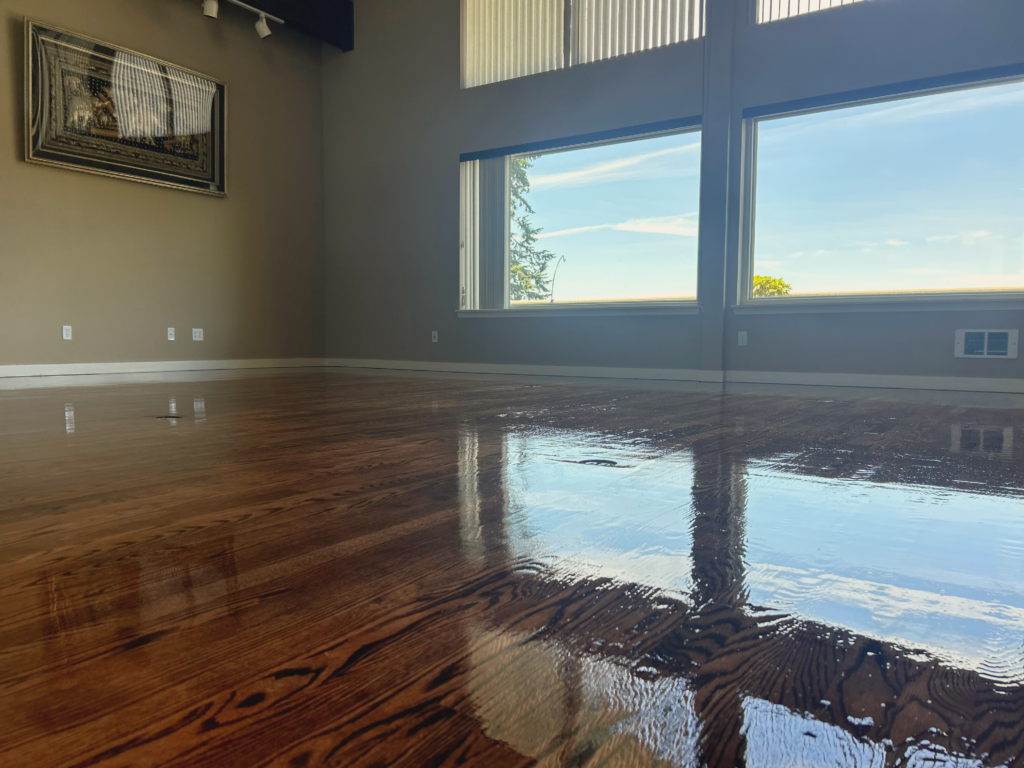
If your hardwood floors in Bellevue are looking tired, you usually have two options: a screen and recoat (also called a buff and recoat) or a full sand and refinish. The right choice depends on one thing: is the protective finish worn out… or is the wood itself damaged?
Below is a simple decision guide, real-world examples, and a quick checklist to help you choose the correct hardwood refinishing service in Bellevue (and avoid paying for more work than you need).
Quick answer: the difference in one sentence
- Screen & recoat = lightly abrade the existing finish and apply a new topcoat (best for dull floors with light surface wear).
- Full refinish = sand down to bare wood, fix deeper issues, then stain/finish (best for scratches, discoloration, uneven sheen, or worn-through areas).
How to tell which one you need (Bellevue homeowner checklist)
You’re a good candidate for a screen & recoat if:
- Your floors look dull or have light surface scratches, but the color is still consistent.
- You don’t see raw wood exposed in high-traffic areas (hallways, kitchen paths, entries).
- The finish is intact—no widespread peeling, flaking, or gray “dry” patches.
- You want a refresh with less downtime and minimal disruption.
You likely need a full refinish if:
- You have deep scratches you can catch with a fingernail.
- There are dark stains, pet spots, or water marks that go below the finish.
- Some areas look lighter because the finish has worn through to bare wood.
- The floor has unevenness (cupping/crowning), or previous coatings are failing.
- You want to change stain color or significantly alter the look.
What a screen & recoat includes
A screen and recoat is a maintenance service designed to extend the life of your hardwood by renewing the protective layer before it fails.
- Protect surrounding areas and prep the space
- Lightly abrade (“screen”) the existing finish so the new coat bonds
- Clean thoroughly to remove dust and residue
- Apply a new protective topcoat (sheen options typically include matte/satin/semi-gloss)
Best for: floors that are structurally fine but need a fresh, uniform sheen.
What a full sand and refinish includes
A full refinish is the reset button. It removes the old finish and surface damage and gives you a brand-new base to stain and protect.
- Room prep and surface protection
- Sanding down to bare wood to remove wear, scratches, and old coatings
- Repairs as needed (board replacement, patching, leveling transitions)
- Optional staining (color change)
- Multiple coats of finish for durability
- Final inspection and cleanup
Best for: floors with real damage, discoloration, or worn-through areas.
Common Bellevue scenarios (and what usually wins)
1) “My living room looks fine, but the hallway is dull and scuffed.”
If the hallway is just worn at the finish layer (no bare wood), a screen & recoat often restores a consistent look.
2) “Our entryway has dark marks from wet shoes and a dog.”
Dark staining often penetrates below the finish. This typically points to a full refinish (and sometimes localized board repair depending on severity).
3) “Some rooms are shiny, some are matte, and the color varies.”
That inconsistency is a sign of finish failure or multiple coatings. A full refinish is usually the cleanest, most reliable result.
Cost drivers that matter (so quotes make sense)
Pricing in Bellevue is usually determined by scope and complexity more than anything else. Expect the following to move your estimate:
- Total square footage (more area = more labor and materials)
- Repairs (stains, board replacement, squeaks, leveling)
- Stain changes (testing + additional labor)
- Stairs and landings (more detail work per square foot)
- Furniture moving and access constraints
How to avoid the #1 mistake: recoating a floor that can’t bond
A screen and recoat only works if the new finish can properly bond to the existing surface. Floors with wax, certain cleaners/residues, or failing coatings may require a different approach.
If you’re unsure, the safest move is a site visit so you don’t invest in a recoat that peels later.
Want a pro opinion? We’ll tell you the right service (not the most expensive one)
If you’re in Bellevue and trying to decide between a screen & recoat and a full refinish, we can assess your floors and recommend the most cost-effective path to the result you want.
Contact Four Point Flooring for a free quote on your hardwood refinishing project!
Not located in Bellevue? No Problem! We serve the greater Eastside including Bothell, Kirkland, and Redmond.
Related reading
FAQ
Can you recoat if there are deep scratches?
If scratches cut through the finish into the wood, recoating won’t remove them. That usually requires sanding (full refinish) to level the surface.
Do I have to leave the house during refinishing?
Not always. It depends on scope, ventilation, finish type, and your household needs. We’ll walk you through the least disruptive plan for your home.
How often should hardwood be recoated?
It varies by traffic, pets, and maintenance. The best time is before the finish wears through to bare wood—this can save you from a full refinish later.